

Too often, investigations rely on assumptions.
But without identification, there is no clear way forward.
Why particle identification is critical
One of the key principles in GMP environments is maintaining control over contamination. When a particle is detected, identifying its nature is a crucial step in understanding the situation.
Without this knowledge:
-
the criticality of the particle remains unclear
-
the source of contamination cannot be confirmed
-
corrective actions may be misdirected
-
the risk of recurrence remains
Accurate particle identification allows teams to move from uncertainty to objective decisions.
How particle identification works
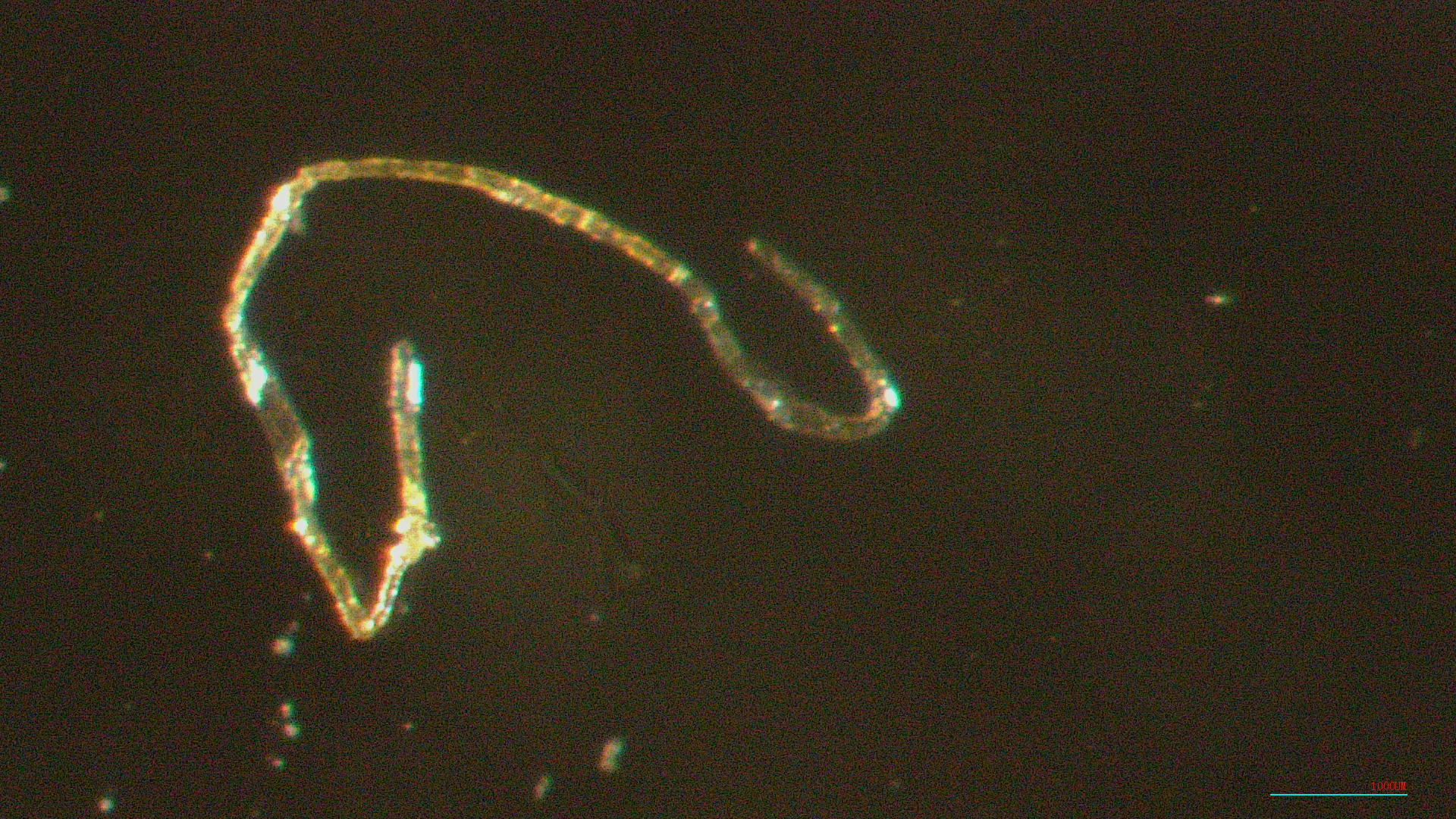
At eyetec, particle identification starts with optical microscopy.
The particle is first examined under a microscope to assess its basic characteristics. Based on these observations, the most suitable analytical technique is selected.
We use two complementary techniques:
Scanning Electron Microscopy (SEM)
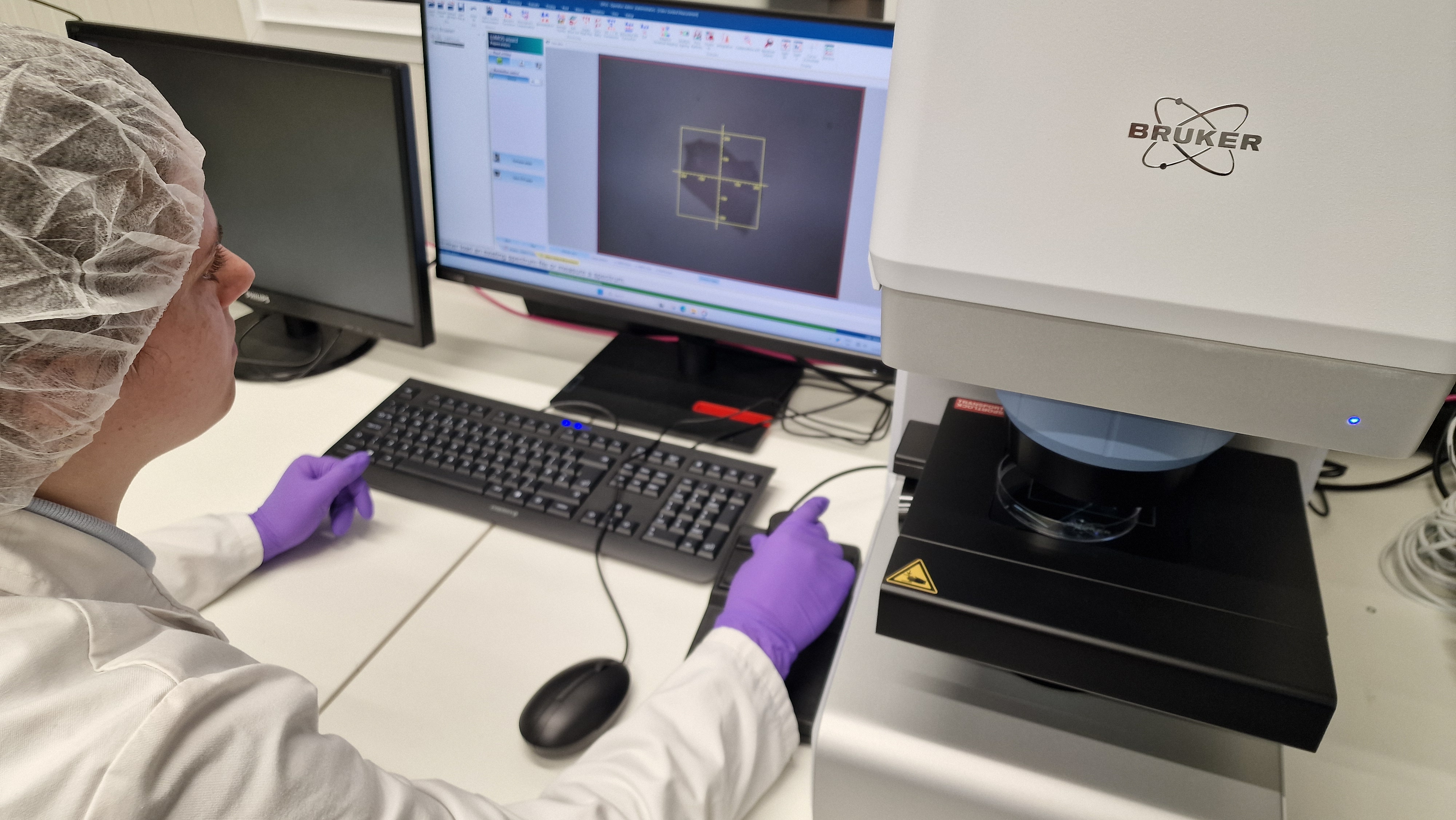
SEM provides high-resolution images of the particle surface and allows us to analyze:
-
particle morphology (shape and structure)
-
surface features
-
elemental composition through EDX analysis
This makes SEM particularly suitable for inorganic materials, such as:
-
metals
-
metal alloys
-
glass fragments
-
mineral particles
By combining SEM and FTIR, a wide range of materials can be analyzed.
This approach allows for reliable and well-substantiated particle identification, supporting further investigation.
From identification to root cause
Identifying the particle is only part of the process.
To truly understand contamination, it is often necessary to compare the particle with reference materials from the production environment, such as:
-
equipment components
-
packaging materials
-
process materials
-
environmental sources
By comparing these materials, it becomes possible to determine where contamination most likely occurred.
This enables:
-
targeted corrective actions
-
prevention of recurrence
-
improved process reliability
Particle identification therefore goes beyond solving a single incident, it supports continuous process improvement.
Introducing the Particle Monitoring Program
To support the launch of our particle identification service, eyetec is running the Particle Monitoring Program.
During this limited campaign, pharmaceutical manufacturers can submit a particle whose origin is unclear.