
Particle Identification
eyetec helps pharmaceutical manufacturers identify unknown particles.
eyetec supports pharmaceutical manufacturers in identifying unknown particles.
Using electron microscopy and infrared spectroscopy, we determine what a particle is made of. This insight helps teams trace the source of contamination. As a result, corrective actions can be implemented more effectively, reducing downtime and minimizing the risk of recurring contamination.
Detected a particle.
But unsure what it is or where it comes from?
Combining SEM and FTIR
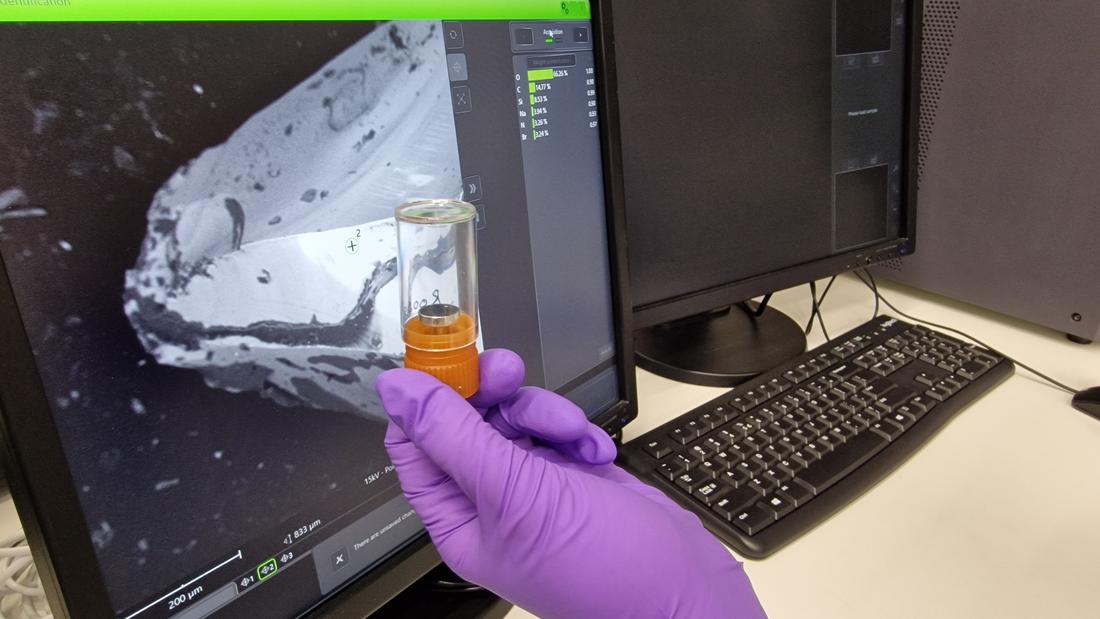
Our particle identification service combines the strengths of Scanning Electron Microscopy (SEM) and Fourier Transform Infrared (FTIR) analysis.
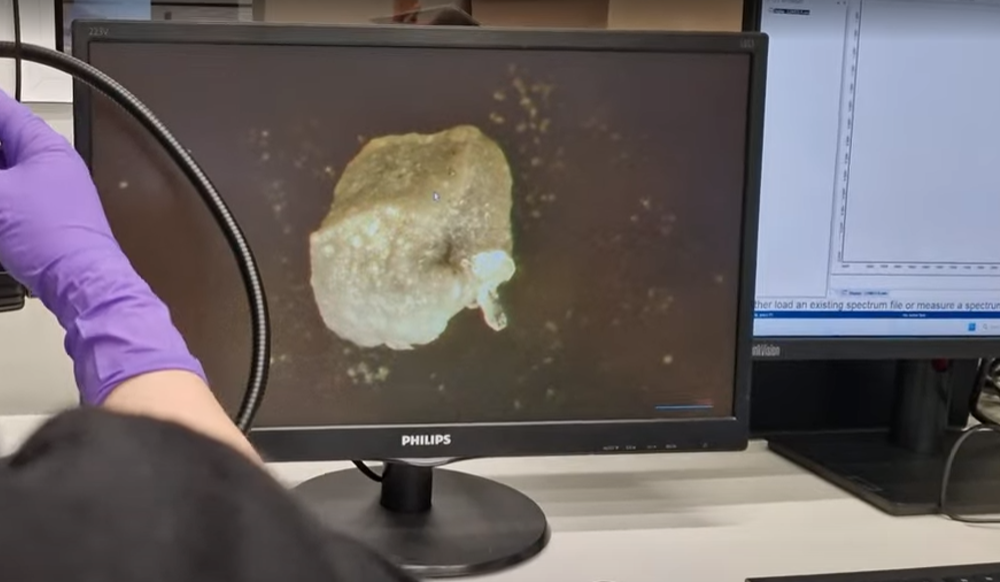
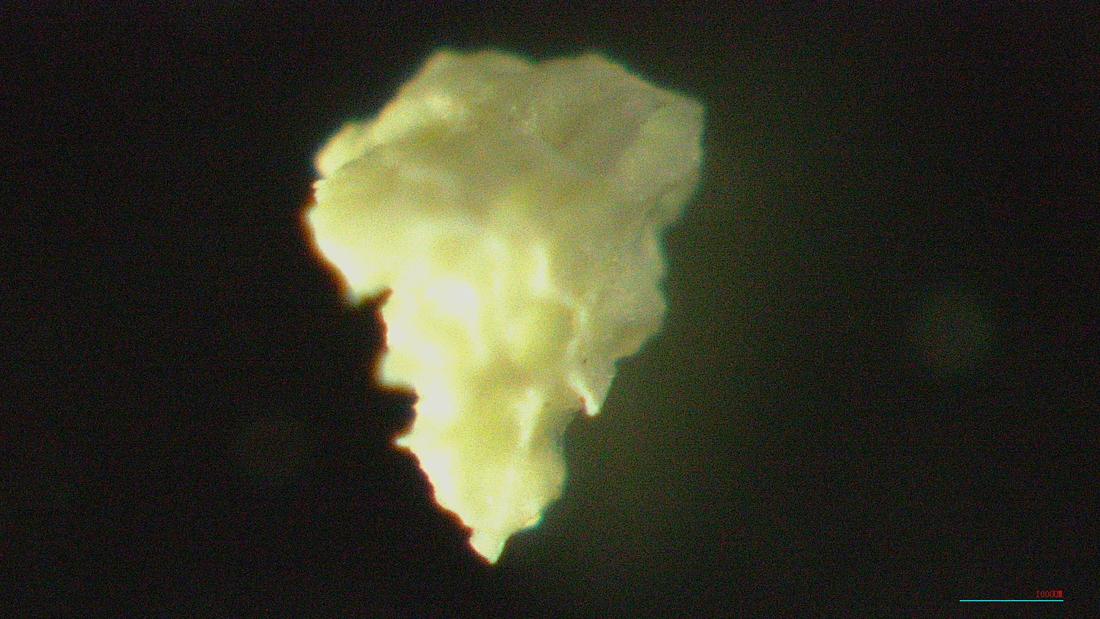
Our particle identification process starts with optical microscopy.
First, the particle is examined under a microscope.
Based on these observations, we determine which analytical technique is most appropriate.
Depending on the material characteristics, we use:
• SEM for inorganic materials
• FTIR for organic materials
By combining both techniques, we can analyze a wide range of materials and obtain reliable particle identification results.
Scanning Electron Microscopy (SEM)
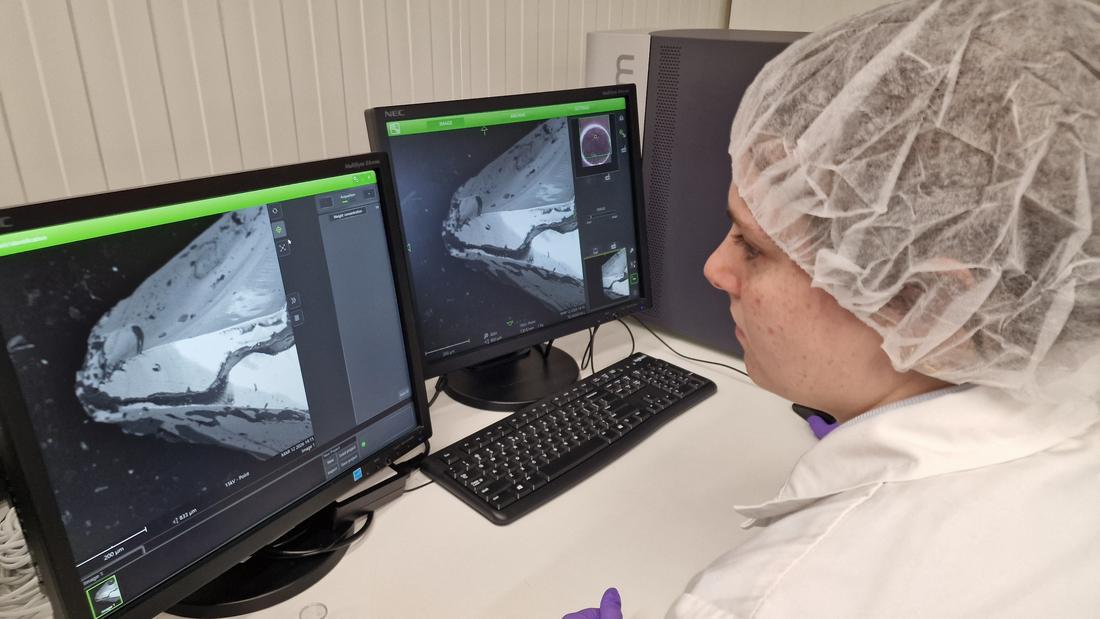
SEM uses a focused beam of electrons to scan the surface of a particle. This produces high-resolution images of the particle.
SEM allows us to study:
• particle morphology (shape and surface structure)
• particle size and surface features
• elemental composition through EDX analysis
Elemental analysis identifies which chemical elements are present in the particle.
This makes SEM particularly suitable for inorganic materials, such as:
• metals
• metal alloys
• glass fragments
• mineral particles
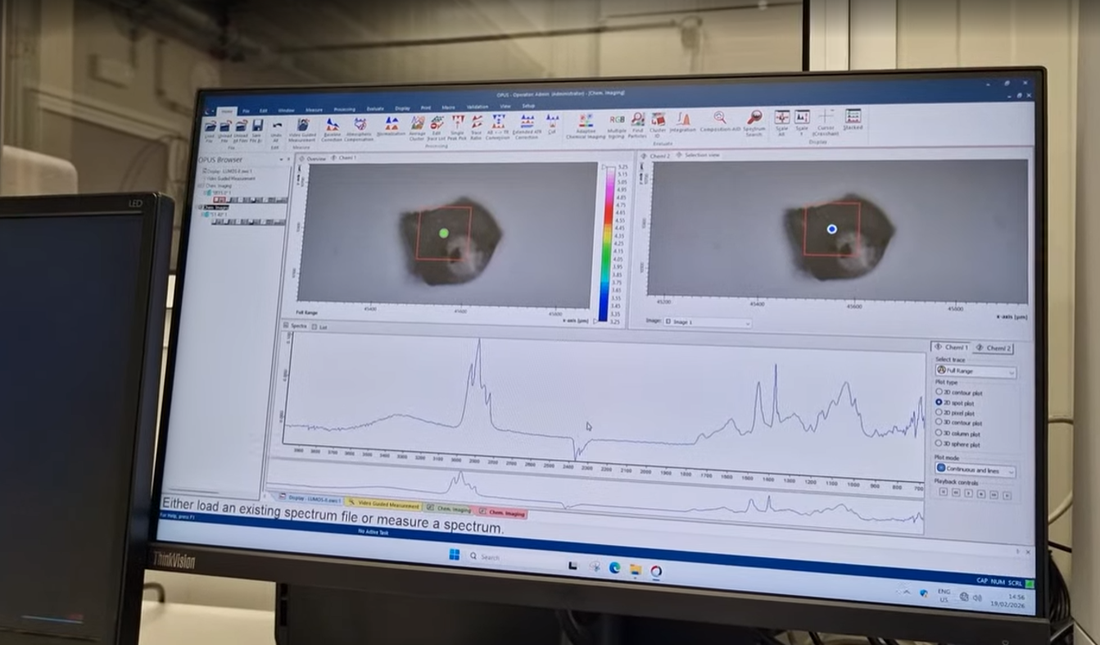
Fourier Transform Infrared (FTIR) analysis
Fourier Transform Infrared Spectroscopy
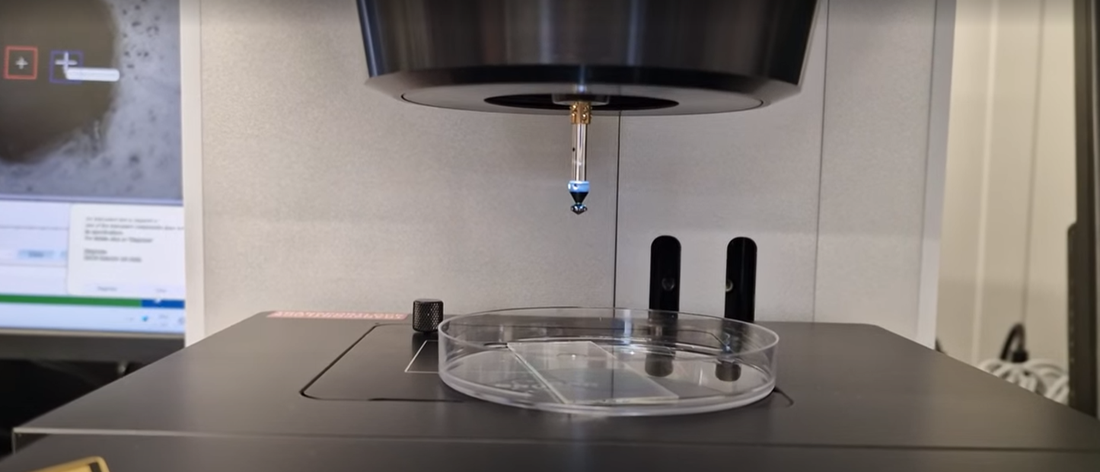
FTIR identifies materials based on their molecular structure.
The technique exposes the sample to infrared light.
Molecules absorb this light at specific wavelengths.
This produces a unique spectral fingerprint for each material.
FTIR allows us to identify organic materials, such as:
• polymers
• plastics
• rubber components
• fibers
• packaging materials
Comparing with production materials
When investigating contamination, identifying the particle alone is often not enough.
To support the investigation, we can also analyze reference samples from the production process.
These may include materials such as:
• equipment components
• packaging materials
• process materials
• environmental sources
By comparing these reference samples with the detected particle, we can determine where contamination most likely occurred.
From particle identification to process improvement
Understanding the origin of contamination allows quality teams to:
• implement targeted corrective actions
• prevent recurrence
• improve process reliability
Particle identification therefore does more than resolve individual incidents.
It also supports continuous improvement of the production process.
Particle identification with SEM and FTIR