By generating data on defect type, size and detectability, a PoD study gives insight into the limitations and performance of the selected inspection method.
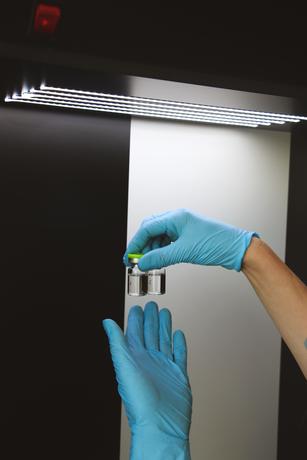
In this article, we look at a PoD study conducted by eyetec on 1 mL AT vials and 2 mL CZ vials with a low fill volume of 0.3 mL. The study focused on mobile particle defects and the factors that can influence detection during Manual Visual Inspection.
Why PoD studies matter
A PoD study is used to assess the detection capability of a Manual Visual Inspection method. It helps show how consistently defects are detected when they are present, and where the selected inspection method may have limitations.
This data can help manufacturers understand which particle types and sizes are detected with the chosen method, and whether the method needs further optimisation. It can also support comparison between different MVI methods or set-ups.
PoD data can help manufacturers:
- Understand the limitations of the inspection method
- Optimise Manual Visual Inspection conditions
- Support operator training and qualification
- Compare MVI methods or set-ups
- Quantify risks linked to missed defects and false rejects
- Support EU and US visual inspection expectations
Scope of the study
The objective was to assess the probability of detecting mobile particle defects in two vial formats:
- 1 mL AT vials
- 2 mL CZ vials with 0.3 mL fill volume
For each vial type, dedicated test sets were inspected 30 times by at least 3 qualified operators. The samples were produced by eyetec under clean and protective conditions using laminar airflow to reduce contamination risk.
Type of defects | detection rate
-
Transparent plastic:

- White plastic:

- Dark colored rubber:

- Stainless steel:

- Light colored fiber:

Key findings
The results showed clear differences between vial types and defect materials. Dark colored rubber was detected consistently well across both vial formats, while transparent plastic and light colored fibers were more challenging, especially in AT vials.
The results confirm that defect material, size, contrast, mobility and container format all influence detection probability.
Conclusion
The PoD study confirms that Manual Visual Inspection methods should be tailored to the specific characteristics of each vial type and defect profile. Fibers presented particular detection challenges due to their static properties, tendency to adhere to vial surfaces and long, narrow structure. Their visibility can also vary depending on the inspection angle, making consistent detection more difficult.
For AT vials and CZ vials, method optimisation may require different approaches to improve detection reliability during Manual Visual Inspection.
Want to discuss PoD studies for your inspection process?
eyetec can help you explore suitable defect samples, Manual Visual Inspection set-ups and PoD study support for vials and other container formats.